

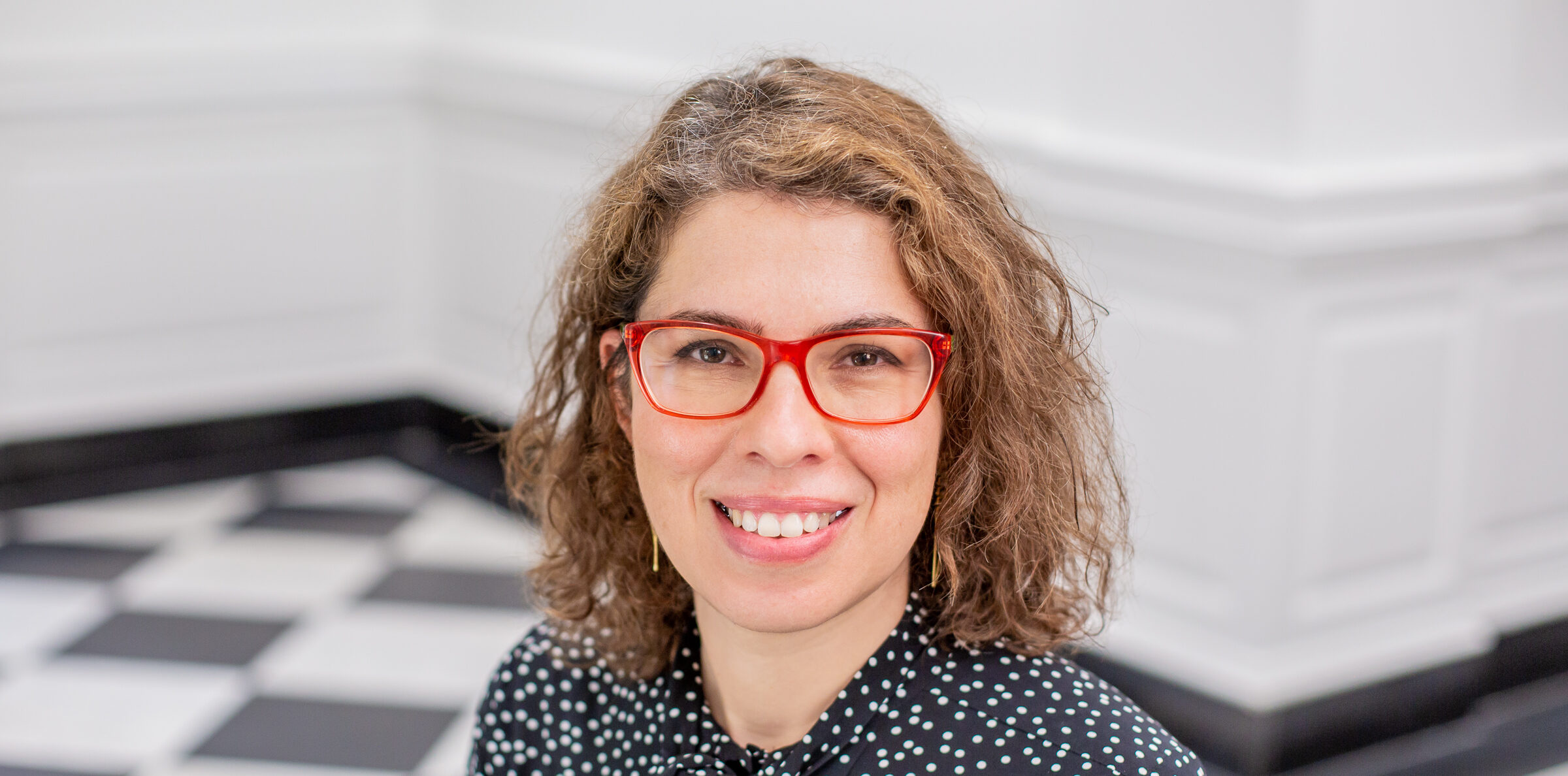
Renata Leitão has been named the new Evalyn Edwards Milman Fellow in the Bronfenbrenner Center for Translational Research (BCTR) at Cornell Human Ecology (CHE). She will serve in the role through June 2027.
The fellowship enables CHE faculty members to elevate their translational research efforts to align with the BCTR’s mission of connecting research with communities to enhance human development, health and well-being.
Leitão is a graphic designer and social design researcher. Her research focuses on the interplay between the ideas we hold about the world (paradigms, ideals, imaginaries and meta-narratives) and the kind of tangible worlds we design. Leitão leads the Pluriversal Futures Design Lab; its mission is to foster societal transformation by addressing the limitations of how current environmental and social crises have been addressed.
Leitão will use the fellowship to produce videos and a podcast about societal transformation and paradigmatic change to make this knowledge more accessible, specifically for youth. In particular, she aims to explore how imaginaries, fantasies, utopias, and promissory stories frame and influence technological advancement, having a profound impact on how design and STEM students perceive their role in society. Her lab will produce eight videos, each accompanied by a corresponding podcast episode elaborating on the content of each video.
“The Pluriversal Futures Design Lab is founded on the belief that we can only effectively address the dire meta-crises humanity faces by changing the underlying paradigm,” said Leitão. “However, examining our current paradigm in order to change it is incredibly challenging; it’s like trying to examine our glasses while we’re looking through them.”
Leitão launched and co-led the Design Research Society’s (DRS) Pluriversal Design Special Interest Group, an international research network that aims to highlight multiple perspectives in design.
“We are thrilled to have Dr. Leitão advancing her work through this BCTR fellowship,” said Anthony Burrow, director of the center. “Her scholarship truly embodies the BCTR’s mission to solve problems and improve lives along with elevating the innovative research that emanates from CHE.”